Introduction
Ontario youth soccer includes several levels and pathways. The names can make the system sound like a ladder where every player should keep climbing as quickly as possible. In reality, each environment comes with different standards, schedules, costs, travel, competition, and expectations. The right choice depends on the player, the family, and the quality of the specific environment.
This overview is a starting point, not a ranking. League structures can change. Families should check current official information and ask each club detailed questions before accepting a place.
House league
House league is often the best introduction for younger players, beginners, multi-sport athletes, and anyone who wants to enjoy soccer with a manageable commitment. The main goals are participation, confidence, movement, basic skill, and belonging.
A good house league can build a lasting love of the game. It should not be described as a failure to reach something “better.” Players develop on different timelines, and many benefit from time to explore without high pressure.
Parents can ask how teams are formed, how coaches are supported, whether players try different positions, and how the program creates a safe and positive experience.
Rep or competitive soccer
Rep usually means more structured training, stronger competition, tryouts or assessments, more travel, and a larger commitment from the whole family. The exact standard can vary by club, district, and age.
The important questions are practical. How many sessions and matches are expected? What is the complete annual cost, including uniforms, travel, tournaments, and optional training? What qualifications and support do coaches have? How are playing time, positions, feedback, and conflict handled?
Do not rely only on the word “competitive.” Understand the day-to-day experience the player is actually joining.
iModel
Ontario Soccer currently describes iModel as an approved competitive model for boys’ and girls’ youth teams below OPDL. Its 2026 overview identifies U14–U18 as the main age groups and includes U13 in a modified pilot format. Ontario Soccer has also announced that the model will transition to regional Integrated Soccer Leagues for the 2027 outdoor season.
For some players, iModel can offer a strong balance of competition, development, playing opportunity, and regional travel. The label alone still does not answer whether a particular team is a good fit. Families should evaluate the coach, roster, training environment, travel, cost, and the player’s likely role.
Because the structure is changing, check the current Ontario Soccer iModel page rather than relying on an older club post or social-media graphic.
OPDL
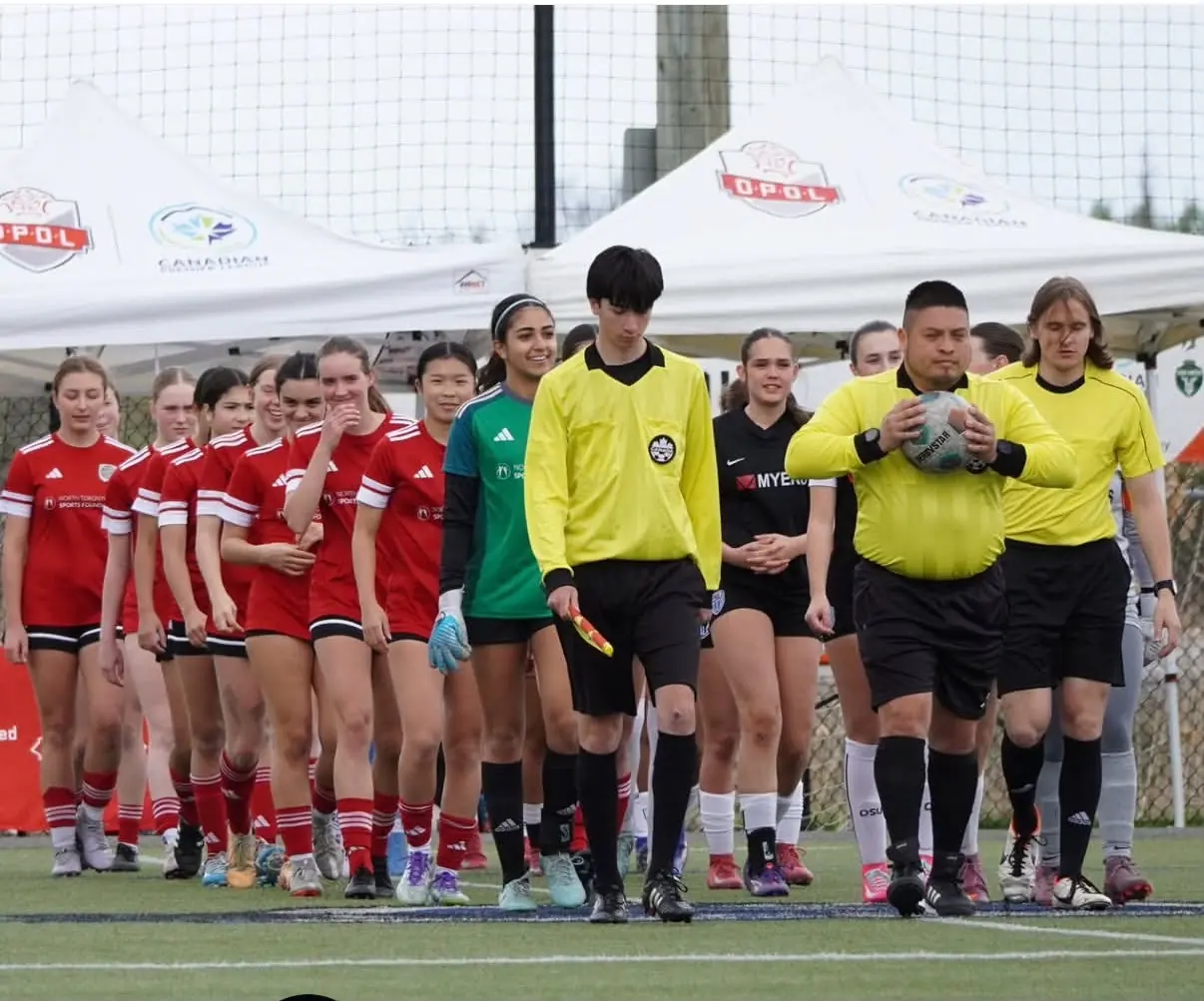
The Ontario Player Development League is Ontario Soccer’s standards-based high-performance youth league. It is designed for highly committed players in a more demanding training and competition environment. Ontario Soccer also describes OPDL as the primary avenue for detection into future provincial screening competitions.
That can make OPDL attractive to players with high-performance goals, but exposure is not a guarantee. The schedule, pressure, travel, physical demands, and cost require an honest family conversation. A player needs appropriate challenge, but also enough confidence, communication, recovery, and support to keep developing.
Review current details directly through Ontario Soccer and the licensed club.
Provincial pathway
Provincial screening and development opportunities are intended for advanced players identified through Ontario’s Talented Pathway. OPDL is the primary detection venue, and Ontario Soccer publishes alternate identification information for eligible players outside OPDL. Age groups, dates, and processes can change each year.
This is another reason not to make decisions based on rumours. Use the official Talented Pathway information and ask qualified people how the current process applies to the player.
Advice for players
Pay attention to how you are learning. Do you understand your role? Are you getting specific feedback? Can you make mistakes and respond? Is the environment helping you become more consistent, confident, and responsible?
A team level may be part of your goal, but it should not become your identity. Your habits travel with you to every environment.
Advice for parents
Compare total cost, travel, schedule, coaching, culture, safety, playing opportunities, communication, and impact on school and family life. Ask what happens when a player struggles or is injured. Be careful with any program that guarantees exposure, selection, scholarships, or recruitment.
The strongest choice is not always the highest available level. It is the environment where this player, at this moment, can be appropriately challenged and genuinely supported.
Final reflection
The pathway becomes clearer when families stop asking only, “What is the next level?” and start asking, “What does this player need next?” That question makes room for ambition, but it also makes room for health, confidence, education, and long-term growth.